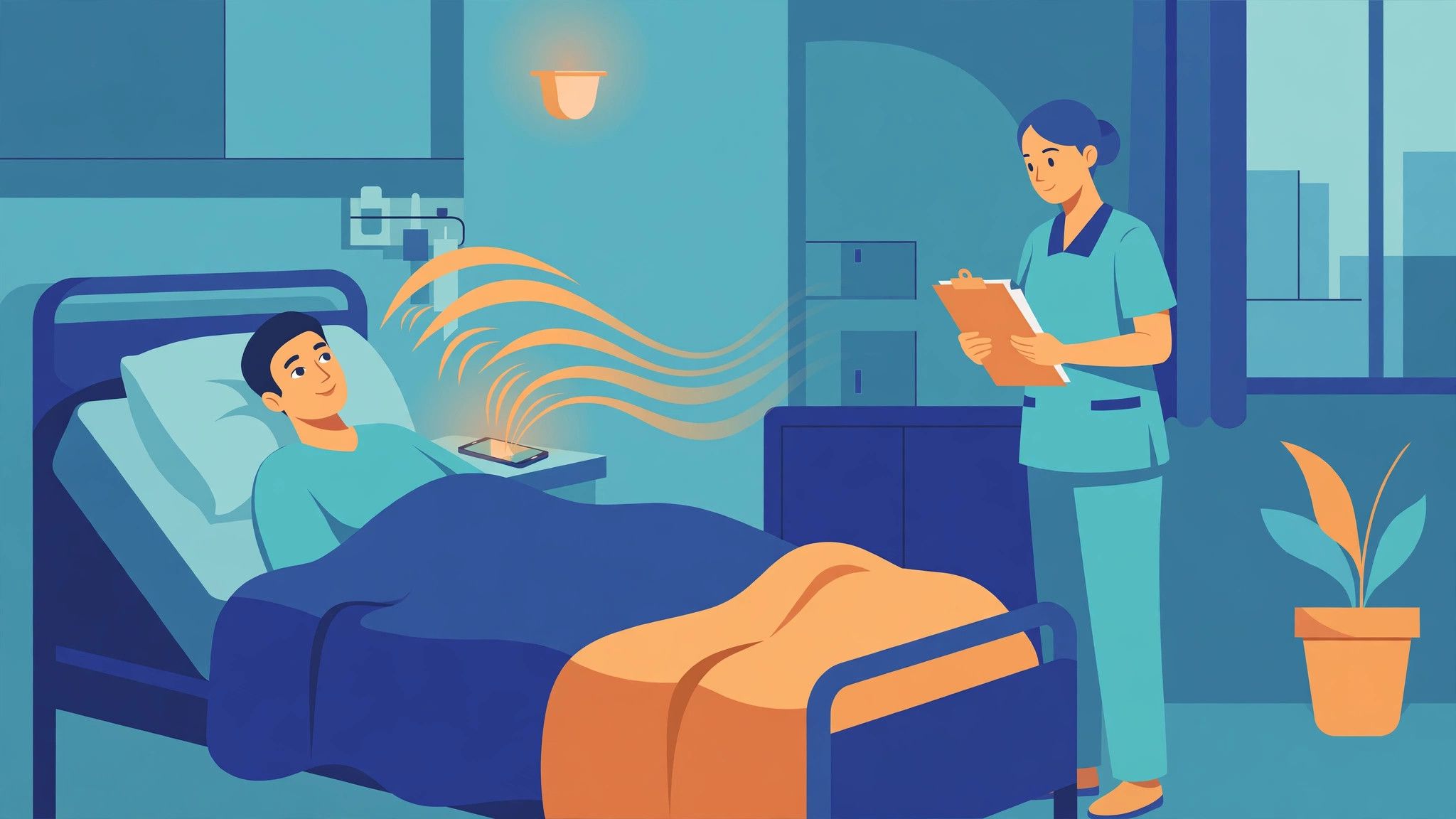
TL;DR: Text to speech turns written medical information into clear spoken audio, helping patients follow discharge instructions, remember medications, and understand their care. Hospitals use it for accessible patient education, appointment reminders, and multilingual support. It improves understanding and adherence — but it never replaces a clinician's judgement.
What Is Text to Speech for Medical Patients?
Definition: Text to speech for medical patients is the use of AI-generated voice technology to read health information aloud — discharge instructions, medication schedules, appointment reminders, and patient education — so people can hear their care plan instead of only reading it.
A hospital stay ends with a stack of paper: discharge summaries, medication lists, wound-care sheets, follow-up appointments — often ten or more pages, written in clinical language. Studies of patient behaviour consistently show that people forget much of what they are told at discharge, and written instructions do not always bridge that gap.
That is the problem text to speech (TTS) solves. Instead of relying on a printed sheet alone, the same information is delivered as natural-sounding spoken audio that a patient can listen to at home, replay as needed, and hear in a language they understand.
SynVoice's own trained models generate this audio from the hospital's written materials — no recording studio, no voice actor to book: a care team uploads its text, chooses a clear, calm voice, and produces patient-ready audio in minutes. The result is not a replacement for a doctor or nurse. It is a way of making sure the instructions a clinician already gave are actually heard, understood, and followed.
How Does Text to Speech Help Patients After Discharge?
The first days after leaving hospital are the riskiest part of a patient's journey. Instructions are complex, energy is low, and there is nobody in uniform nearby to ask. Spoken instructions help in concrete ways: listening is easier than reading when you are unwell, audio removes the guesswork from pronouncing drug names such as amoxicillin or metoprolol, and a family member can listen alongside the patient so the whole household hears the same plan.
Hospitals that add audio to discharge typically cover the same materials: the discharge summary in plain language, a medication schedule, wound-care steps, warning signs that mean "call us now," and the follow-up appointment details. Each becomes a short audio track the patient can keep and replay.
Can Text to Speech Improve Medication Adherence?
Medication adherence — taking the right drug, at the right dose, at the right time — is one of the most stubborn problems in healthcare. People miss doses because they forget, the schedule confuses them, or they do not understand why a drug matters. Spoken reminders address all three causes.
A printed medication list says "metformin 500 mg, twice daily with food." An audio version can say the same thing in a full sentence, explain in plain language what the medicine is for, and remind the patient what to do if a dose is missed. That extra context turns a list into understanding.
Spoken medication schedules work best when they are:
- Short and specific — one medicine per track, so the patient can replay just the part they need.
- Timed to the routine — "with breakfast" and "before bed" beat "08:00 and 20:00" for many patients.
- Consistent — the same voice and wording every time, so the instruction becomes familiar rather than something to decode again.
- Paired with a reminder — an audio message that arrives when a dose is due is harder to ignore than a line on a sheet pinned to a fridge.
How Does TTS Make Healthcare Accessible for Low-Vision and Low-Literacy Patients?
Accessibility is where text to speech earns its place in healthcare most clearly. Many patients cannot read standard printed materials comfortably — because of low vision, limited literacy, or materials written in a language they speak but do not read well.
For low-vision patients, audio is not a convenience. It is the only way the information reaches them independently. A patient who cannot read small print can listen instead, pause and replay without asking a relative to read aloud — preserving privacy around sensitive health information. This is the same accessibility principle behind text to speech for seniors, where spoken audio helps older listeners follow instructions they might struggle to read.
For low-literacy patients, the barrier is not eyesight but reading confidence. Medical documents are written at a reading level many adults never reached, and clinical terms make that worse. Most people understand spoken language at a higher level than they can read, and a calm, clearly paced voice gives them time to absorb each instruction.
| Patient group | Reading barrier | How spoken audio helps |
|---|---|---|
| Low-vision patients | Small print, poor contrast, eye fatigue | Full instructions by listening, replayable at home |
| Low-literacy patients | Complex medical vocabulary, long sentences | Plain-language audio at natural speaking pace |
| Elderly patients | Vision, hearing, and concentration changes | Slower pace, larger pauses, familiar voice |
| Non-native speakers | Written language harder than spoken | Audio in the patient's own language |
| Post-surgery patients | Pain, medication effects, low energy | Listen while resting, no reading effort required |
Good practice is to keep the spoken version in plain language rather than reading the clinical document word for word.
What Role Does Multilingual TTS Play in Patient Education?
In any diverse city, a hospital's patients speak many languages, yet printed education materials are usually produced in one or two. Everyone else gets a summary, a relative translating on the spot, or nothing at all.
Multilingual text to speech changes that equation. The same discharge instructions can be generated in the patient's preferred language from the same source text, without re-recording anything. A hospital serving Urdu, Punjabi, Arabic, Spanish, or Mandarin-speaking patients can offer each of them the same quality of explanation in the language they understand best. The broader accessibility case is covered in our guide to text to speech for accessibility, which explains how spoken audio opens up content for people who cannot rely on print.
This matters most where misunderstanding is dangerous: taking a blood thinner, spotting a wound that needs urgent attention, or knowing which symptoms mean returning to hospital. A patient who hears those instructions in their own language is more likely to act on them correctly.
There is a limit worth stating plainly. Machine-generated multilingual audio must be checked by a fluent speaker before it reaches patients, especially for medication and safety-critical instructions. A mistranslated instruction is worse than a missing one, so the workflow is: clinicians approve the content, a fluent reviewer checks the audio, and only then does it go to the patient.
How Are Hospitals Using AI Voice for Appointment and Post-Surgery Reminders?
Missed appointments cost hospitals time and patients their place in a treatment plan. Post-surgery follow-up is even more time-sensitive: a wound check missed by a week can turn a small problem into a readmission.
AI voice reminders solve a practical problem. A phone call from a nurse takes staff time and often goes unanswered, while a text message is easy to miss or hard to read. A short voice message — "Your follow-up appointment is on Thursday at 10 in the morning, in clinic 4, bring your medication list" — is personal, clear, and hard to misunderstand.
Hospitals use AI voice for reminders in three common ways, as part of a wider shift toward spoken patient communication — see our overview of AI voiceover for healthcare patient education for how clinics are using voice across the patient journey:
- Appointment reminders sent a day or two before the visit, with the date, time, department, and what to bring.
- Post-surgery check-ins that walk the patient through the signs to watch for in the first days at home, and who to call.
- Preparation instructions read aloud the day before a procedure — fasting rules, which medicines to pause, and what time to arrive — so nothing is missed because a letter went unread.
Because the audio is generated from text, the same reminder can be personalised with the patient's name, appointment details, and language, and updated instantly if the appointment moves.
What Should a Good Patient Audio Message Sound Like?
Not every AI voice suits healthcare — a voice that works for an advertisement can feel wrong delivering medical instructions.
Definition: A patient-ready voice is a calm, clearly paced AI voice with natural pauses, correct pronunciation of medical terms, and a warm, unhurried tone — designed so that a tired, anxious, or elderly listener can follow every instruction the first time.
Pace matters most. Spoken instructions should run slightly slower than conversational speech, with clear pauses between steps. Numbers and doses need emphasis, not speed — rushing "take one tablet three times a day" invites exactly the error the audio is meant to prevent.
Tone matters too. Patients receiving medical news are often anxious, and a flat robotic voice can make instructions feel cold or alarming. A warm, steady voice signals that the information is routine and manageable — so hospitals typically choose one consistent voice for all patient materials.
Finally, keep messages short: one topic per track, two to three minutes at most, most important instruction first.
What Can Text to Speech Not Replace in Patient Care?
Stated plainly: text to speech is a communication tool, not a clinician.
Definition: Clinical judgement is the trained ability of a doctor or nurse to assess a patient, interpret symptoms, weigh risks, and decide what to do next. No audio recording can examine a patient, ask a follow-up question, or notice that something does not look right.
Spoken instructions cannot diagnose. They cannot tell whether a wound is infected, whether chest pain is an emergency, or whether a new symptom needs an urgent visit. They cannot answer a patient's question or change a plan when the patient's condition changes. Any patient audio should end with a clear instruction: if something feels wrong, or if any warning signs appear, contact the care team or seek emergency help immediately.
There are also situations where audio is the wrong medium altogether. A patient in distress needs a human voice on the phone, not a recording. A complex or sensitive conversation — a new diagnosis, a change in prognosis — must happen with a clinician, where questions can be asked and answered.
The honest way to describe TTS in healthcare: it makes good clinical communication reach further, ensuring the instructions a clinician already gave are heard, understood, and remembered. It does not create the clinical decision, and it must never be presented as if it does.
How Can Hospitals Start Using Text to Speech for Patients?
A hospital does not need a large project to begin — the most successful rollouts start small, with one high-impact use case, and expand once patients and staff see the benefit.
| Step | What to do | Why it matters |
|---|---|---|
| 1. Pick one use case | Discharge instructions or medication schedules | Highest impact, easiest to measure |
| 2. Rewrite in plain language | Short sentences, everyday words, one idea each | Audio only works if the text is clear |
| 3. Choose a calm voice | Consistent, clearly paced, warm tone | Patients learn to recognise and trust it |
| 4. Clinician review | A doctor or nurse listens to every track | Catches mispronounced terms and unclear steps |
| 5. Pilot with real patients | Offer audio alongside print to one ward | Real feedback beats assumptions |
| 6. Measure and expand | Track understanding, adherence, and callbacks | Proves value before scaling to more wards |
Start with the ward where readmissions or follow-up calls are highest — that is where better instructions pay off fastest. Offer the audio alongside the printed sheet rather than replacing it. Ask patients whether the audio helped, and listen: if a track confuses people, rewrite it; if a voice is hard to follow, change it.
Frequently Asked Questions
Is text to speech safe for medical patients?
Yes, when it is used correctly. Spoken instructions are safe when a clinician writes and approves the content, the audio is checked before it reaches patients, and the recording clearly tells patients when to contact their care team. TTS is a way of delivering approved information — it does not create medical advice on its own.
Can AI voice replace a nurse explaining discharge instructions?
No. A nurse can answer questions, notice confusion, and adapt the explanation to the patient in front of them. AI voice is best used alongside that conversation, as a take-home version the patient can replay. The human explanation comes first; the audio makes sure it is remembered.
How do patients listen to their medical instructions?
In most hospital programmes, patients receive a link by text message or a QR code on their discharge sheet that opens the audio on their phone. Some hospitals also provide the audio on a ward tablet before discharge, so the patient hears it once with a nurse present and can replay it at home.
Does text to speech work for patients who do not speak English?
Yes. The same instructions can be generated in many languages from the same approved text, which is one of the strongest reasons hospitals adopt it. Each language version should be checked by a fluent speaker, especially for medication and safety-critical instructions, before it is given to patients.
Can text to speech help elderly patients?
Elderly patients are often the biggest beneficiaries. Audio removes the need to read small print, can be replayed as often as needed, and can be delivered at a slower pace with longer pauses. Many older patients also find a familiar, consistent voice easier to follow than a different nurse explaining the same thing each time.
What happens if a patient misunderstands an audio instruction?
That risk is why clinician review matters. Every track should be checked by a doctor or nurse before release, written in plain language, and kept short and specific. The audio should also end with clear guidance on who to call with questions, so a misunderstanding is caught quickly rather than acted on.
Is patient information private when using AI voice?
Patient audio should never contain information that identifies an individual unless the hospital's own secure systems deliver it. General education tracks — how to care for a wound, how to take a common medicine — contain no personal data at all. Personalised reminders should only be sent through the hospital's approved, secure communication channels.
How much does text to speech for patients cost a hospital?
Costs vary with volume, but generating audio from text is far cheaper than recording with voice actors or asking nurses to repeat the same explanation many times. Because one approved text can produce audio in many languages and be reused for every patient with the same condition, the cost per patient falls quickly as a programme grows.