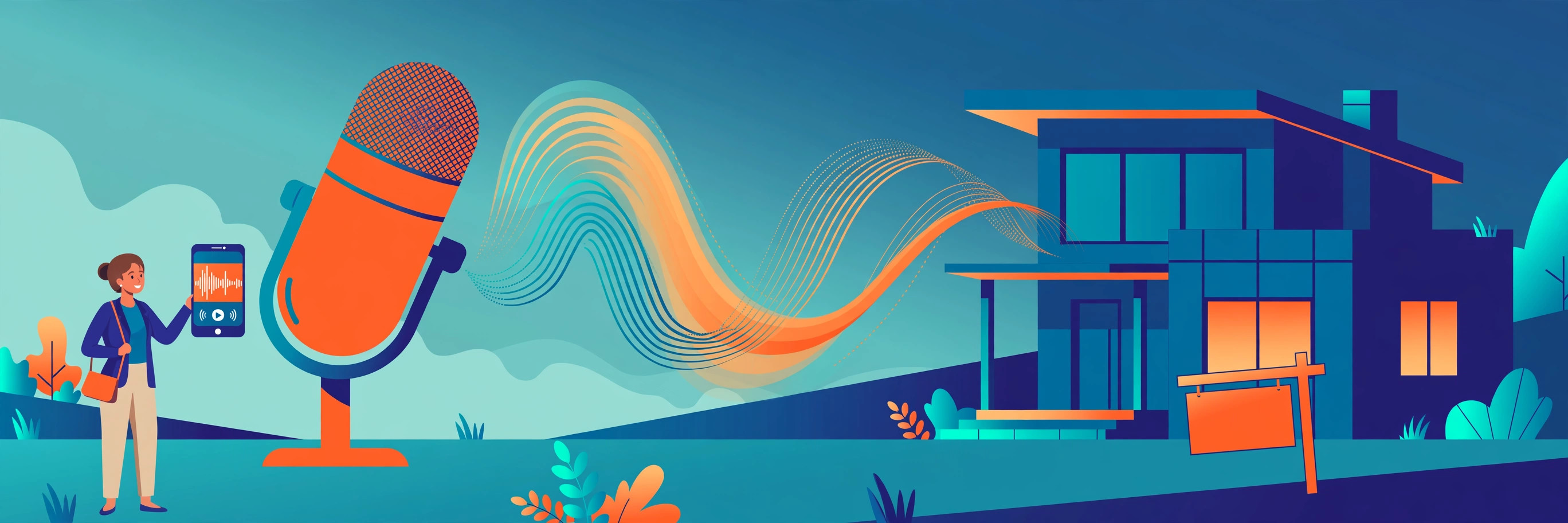
TL;DR: Text to podcast lets real estate agents turn written listings, market updates and buyer guides into spoken audio in minutes, with no microphone or studio. Paste your listing text, choose a natural voice, and publish to podcast platforms and listing pages — giving busy buyers a hands-free way to hear about a home before booking a viewing.
Most home buyers scroll listings on their phones between meetings, on the school run, or in the car. They skim photos, glance at the price, and move on. A listing that can be heard as well as read reaches those buyers in moments when reading is impossible — and it makes your agency sound like the most helpful one in the market.
That is the promise of text to podcast for real estate agents. Instead of booking studio time or recording every listing yourself, you convert the text you already write — property descriptions, neighbourhood guides, market updates — into natural-sounding audio. This guide explains exactly how it works, what it costs, which content converts best, and how to distribute your episodes so they actually generate enquiries.
What Is Text to Podcast for Real Estate Agents?
Text to podcast is the process of converting written text into a spoken audio episode using AI voice technology. You paste in a script or a listing description, choose a voice, and the tool generates a finished audio file you can publish like any other podcast episode.
For a real estate agent, the "text" is material you already produce every week: property descriptions, open-house announcements, suburb profiles, mortgage explainers, and market reports. The "podcast" is that same material in audio form — an episode a buyer can listen to while driving to a viewing.
Definition: Text to podcast is a workflow that turns written content into spoken audio using AI text-to-speech voices, so a document becomes a listenable episode without recording equipment or a studio session.
Unlike a traditional podcast, there is no microphone, no editing timeline, and no retakes. If a price changes or a property goes under contract, you edit the text and regenerate the audio in minutes. That speed is what makes the format practical for listings, which change constantly.
The same approach is already working for other professionals who turn written material into audio. Coaches, for example, convert session notes and frameworks into listenable episodes, as explained in our guide to text to podcast for coaches. Therapists use a similar workflow for psychoeducation content — see text to podcast for therapists — and nonprofits turn impact stories into audio updates, covered in text to podcast for nonprofits. Real estate is a natural next fit, because so much of an agent's value is local knowledge that buyers would rather hear than read.
Why Are Real Estate Agents Turning Listings Into Audio?
Buyers do not lack information; they lack time. The average buyer views dozens of listings before shortlisting three or four homes. Audio helps you stand out in that crowded field for several practical reasons.
First, audio reaches buyers during dead time. Commutes, gym sessions, cooking, and school pickups are all moments when a buyer cannot read a listing but can listen to one. A three-minute audio tour of a property fits perfectly into those gaps and keeps your listing in front of buyers who would otherwise scroll past it.
Second, voice builds trust faster than text. A warm, confident narration of a home's best features feels personal in a way a bullet list never will. Buyers feel they know the agent before the first phone call, which shortens the path from enquiry to viewing.
Third, audio content is reusable. One recording can live on the listing page, in an email to your buyer database, on Spotify and Apple Podcasts, and as short clips on social media. A single piece of work earns attention in four or five places at once.
Fourth, it helps accessibility. Buyers with visual impairments, reading difficulties, or simply tired eyes after a long day can still absorb everything about a property. Accessible listings are also simply better listings — they signal an agency that thinks about every buyer.
Finally, audio improves time-on-page. When a visitor presses play on a listing, they stay longer, and longer visits are a positive signal for search engines. Audio will not rescue a weak listing, but on a strong one it adds measurable engagement.
How Does Text to Podcast Work for a Listing?
Turning a listing into an episode takes five steps, and none of them requires audio experience.
- Write or reuse your listing text. Start with the property description you already have. Tighten it into a spoken script: short sentences, conversational language, and the key facts (price, bedrooms, location, standout features) in the first 30 seconds.
- Choose a voice that fits your brand. Pick a natural-sounding AI voice that matches your agency's tone — warm and friendly for family homes, crisp and professional for luxury apartments. Some agents use a voice clone of their own voice; see our explainer on what voice banking is to understand how that works.
- Generate the audio. Paste the script into your text-to-podcast tool and generate. Listen once through, checking the pronunciation of street names, suburb names, and any unusual words.
- Add an intro and outro. A five-second branded intro ("Welcome to the Home Scout podcast, from...") and a call to action at the end ("Book a viewing at...") turn a recording into a recognisable show.
- Publish everywhere the listing lives. Embed the player on the listing page, send the episode to your email list, and distribute it to podcast platforms. One episode, many touchpoints.
The whole process takes 15 to 30 minutes per listing once you have a template — far less than recording, editing, and re-recording a human voiceover.
What Types of Real Estate Content Work Best as Podcasts?
Not every piece of agent content suits audio. Listings with strong stories, local expertise, and clear advice perform best. Use this guide to prioritise:
| Content type | Best audio format | Ideal length |
|---|---|---|
| Single property listing | Narrated audio tour with feature highlights | 2–4 minutes |
| Weekly market update | Short news-style briefing with prices and trends | 5–8 minutes |
| Neighbourhood or suburb guide | Conversational walkthrough of schools, transport and lifestyle | 8–12 minutes |
| Buyer guide (first home, mortgages) | Educational explainer series | 6–10 minutes |
| Open-house announcement | Quick invite with date, time and top features | 1–2 minutes |
| Agent Q&A / myth-busting | Question-and-answer episode | 8–15 minutes |
Single-property episodes are the easiest place to start, because the script already exists as your listing description. Market updates are the best retention tool: buyers subscribe for the weekly briefing and stay in your orbit until they are ready to buy. Neighbourhood guides have the longest shelf life — a good suburb guide can attract listeners for a year or more.
Content that does not work well in audio includes anything that depends on visuals: floor plans, photo-heavy comparisons, and detailed tables of figures. For those, keep the numbers on the page and use the audio to tell the story around them.
How Much Does Text to Podcast Cost for Agents?
Costs vary widely, from free tiers that cover a handful of listings to professional plans built for agencies publishing daily. The table below shows typical market ranges as of 2026.
| Option | Typical monthly cost | Best for |
|---|---|---|
| Free tier of a TTS tool | $0 | Testing the format with 1–2 listings |
| Creator plan (single agent) | $10–$30 | 10–20 episodes a month |
| Agency / business plan | $30–$100 | A team publishing daily listings |
| Professional voice clone | $20–$100 one-off setup | Agents wanting their own voice at scale |
| Podcast hosting | $0–$20 | Distributing to Spotify and Apple Podcasts |
| Freelance human voiceover | $50–$200 per episode | Luxury listings needing a human touch |
Definition: A voice clone is an AI voice model trained on a short recording of a real person's voice, so generated audio sounds like that person speaking — useful when an agent wants every episode to sound like them without recording each one.
For most solo agents, a creator plan plus free podcast hosting keeps the total under $30 a month. Compare that with a single professionally recorded voiceover, and the economics are obvious. The real cost is not money but consistency: a podcast that publishes twice and stops does nothing. Budget for at least one episode a week for three months before judging the results.
How Do You Distribute a Real Estate Podcast?
An episode nobody can find is wasted effort. Distribution is where many agents stop short, so treat it as part of the workflow, not an afterthought.
Start with your own channels. Embed the audio player directly on the listing page, near the top, so visitors see it before they scroll. Add the episode link to the property email you send to registered buyers. Share a 30-second clip on Instagram, Facebook, and TikTok with a link to the full episode.
Then publish to the podcast directories. Spotify, Apple Podcasts, and Google Podcasts (via YouTube Music) are the big three, and a podcast host distributes to all of them from a single upload. Give the show a clear name — your agency name plus "Property Podcast" or "Home Buying Show" works — and write episode titles that include the suburb and property type, because listeners search that way.
Finally, think about local discovery. Add your podcast to your Google Business Profile posts, mention it in your email signature, and put a QR code linking to the latest episode on open-house flyers and window cards. For a local business, offline prompts drive a surprising share of listens.
What Should You Avoid When Converting Listings to Audio?
Audio forgives less than text. A typo in a listing is embarrassing; a mispronounced street name or a wrong price spoken aloud is worse, because listeners trust what they hear. Keep these guardrails in mind.
Never publish unchecked audio. Always listen to the full episode before it goes live. AI voices occasionally misread numbers ("$1.5 million" can come out oddly), dates, and abbreviations. Check every price, bedroom count, and address.
Do not read the listing verbatim. Written descriptions are dense with adjectives and abbreviations that sound robotic when spoken. Rewrite for the ear: shorter sentences, spoken numbers, and a natural order — the hook first, then the details.
Do not overdo the hard sell. An episode that is pure sales patter gets skipped. Lead with genuinely useful information — the light in the living room at sunset, the walk to the station, the school catchment — and the selling takes care of itself.
Keep episodes short. A single listing rarely needs more than four minutes. Respect the listener's time and they will come back for the next episode.
Disclose AI narration where required. Rules differ by platform and jurisdiction, but transparency is good practice: a short note that an episode was narrated with AI voice technology protects trust if a listener asks.
How Do You Measure Whether Your Audio Listings Work?
Start with the metrics your podcast host already provides: downloads or plays per episode, average listen duration, and subscriber growth. A healthy listing episode should hold at least 60–70% of listeners to the end — if most people drop off in the first 30 seconds, your intro or your hook needs work.
Then connect audio to enquiries. Add a unique call to action to audio episodes — a dedicated landing page, a promo code for a free valuation, or a simple "mention this podcast when you call" line — so you can trace enquiries back to the show. Track which episodes generate the most calls and viewings, and make more of that type.
Watch your listing pages too. Compare time-on-page and enquiry rates for listings with an embedded player against similar listings without one. Even a modest lift across dozens of listings adds up to real revenue over a quarter.
Finally, ask buyers directly. A one-question survey at the end of a viewing — "Did you listen to the audio tour?" — gives you qualitative feedback no dashboard can. Agents who do this consistently report that buyers arrive better informed and more decisive, which shortens the sales cycle.
Frequently Asked Questions
How long should a listing podcast episode be?
A single-property episode should run 2–4 minutes — long enough to cover the price, location, layout and standout features, and short enough to finish on a drive to the viewing. Market updates can run 5–8 minutes, and neighbourhood guides 8–12 minutes. If an episode needs more than 12 minutes, split it into a series.
Do I need recording equipment to turn listings into podcasts?
No. Text-to-podcast tools generate the narration from your written script, so you need no microphone, studio, or recording software. You only need the listing text, a voice you like, and a podcast host to distribute the finished audio. A quiet room and a laptop are enough to review the audio before publishing.
Can text-to-podcast tools clone my own voice?
Yes. Many tools offer voice cloning from a short recording of your voice, typically a few minutes of clean audio. The cloned voice can then narrate every listing in your voice without you recording each one. Check the tool's consent and usage rules, and make sure any cloned voice is your own or one you have written permission to use.
Will audio listings help my Google rankings?
Audio alone does not directly raise rankings, but it helps the signals that matter: longer time-on-page, lower bounce rates, and more returning visitors. Embedding a player on a listing page also creates opportunities for podcast-platform backlinks and branded searches. Treat audio as an engagement booster for pages that are already well optimised, not as a substitute for SEO basics.
Where should I publish a real estate podcast?
Publish on your own listing pages and email list first, since those reach buyers already interested in your properties. Then distribute to Spotify, Apple Podcasts, and YouTube Music through a podcast host so new listeners can discover you. Share short clips on Instagram, Facebook, and TikTok to pull social audiences toward the full episodes.
How often should I publish new episodes?
One episode a week is a realistic minimum for a solo agent — for example, a Friday market update or a featured-listing tour. Busy agencies can publish two or three times a week, covering new listings as they go live. Consistency matters more than volume: a weekly show that runs for six months outperforms a daily burst that stops after two weeks.
Is text-to-podcast legal for MLS listing descriptions?
Using your own listing descriptions is fine, since you wrote them or your agency owns them. Problems arise only if you narrate text you do not own — another agent's description, copyrighted editorial, or MLS data used beyond its licence terms. Always narrate your own words, keep the facts accurate, and disclose AI narration where your platform or local rules require it.